
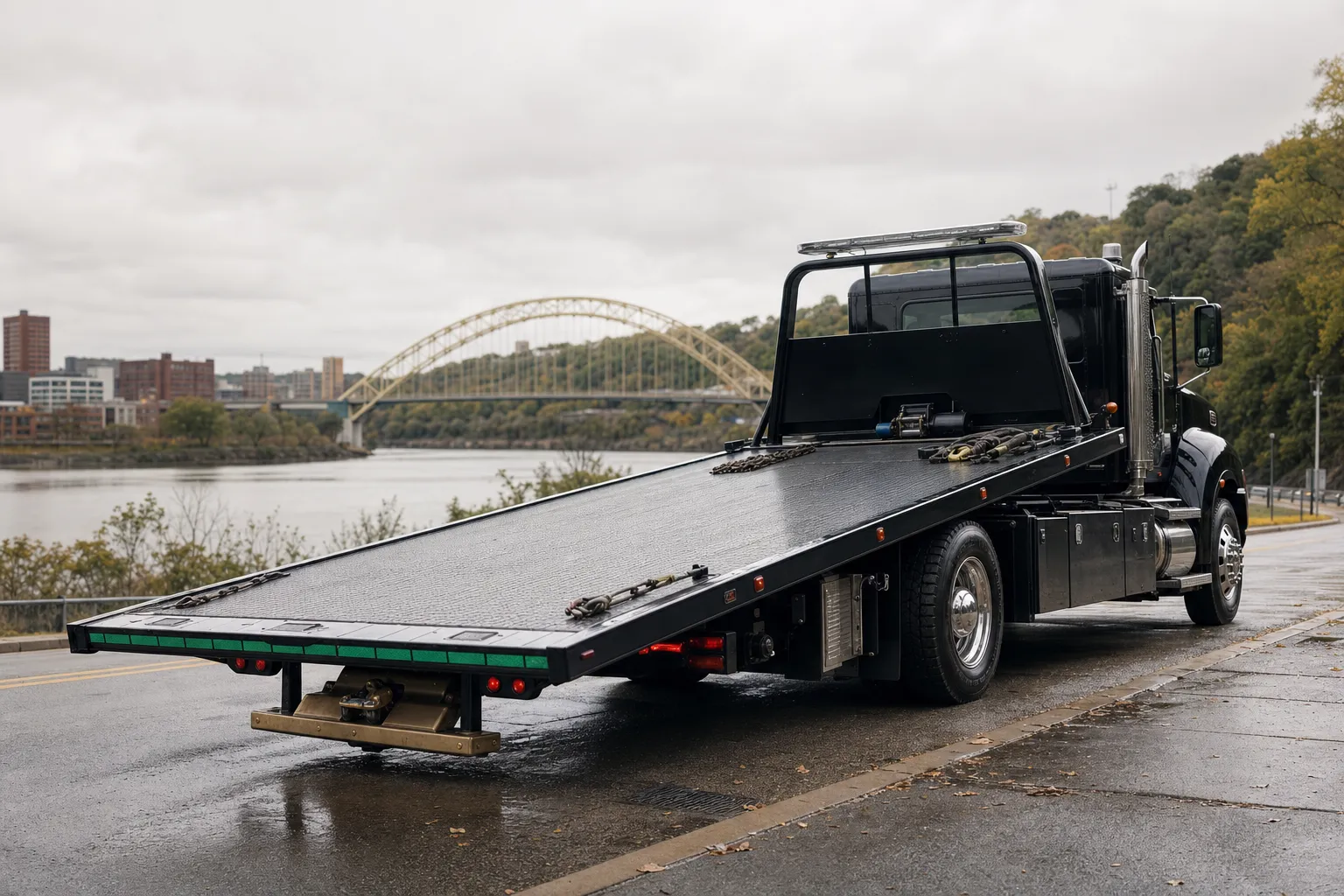
Run flat tires usually cannot be safely repaired after a puncture, so our first step is an on scene assessment of the tire and rim, then we either replace the tire at the road if a safe spare is available or tow the vehicle to a shop when replacement or wheel repair is needed.
What run flat tires are and why they matter
Run flat tires are built so you can drive a limited distance after a loss of air pressure. They use reinforced sidewalls or internal support to carry the vehicle at reduced speed for a short range. That design changes how a flat looks, how damage develops, and what we can do about it on the roadside.
- Run flat tires limit driving distance after a puncture, often to the tire manufacturers recommended range.
- They can hide slow loss of pressure, so a puncture may be noticed only when handling or ride quality changes.
- Repairability is more restricted than with conventional tires because the reinforced structure can develop internal damage that is not visible.
Why this matters locally in Munhall, Pennsylvania
Munhall drivers face a mix of busy roads, tight neighborhood streets, and highway access. That combination makes reliable roadside service important. At Tom Coop LLC Towing and Recovery we respond across Pittsburgh and nearby communities, and we handle flat tire repair and towing when a run flat tire is involved.
Local factors that influence what we do include traffic conditions, safe pull over locations, and nearby tire shops that can supply replacement tires or specially mounted run flat tires.
How we assess a run flat tire on scene
- Initial safety check. We park the truck where it protects you and the vehicle, set warning lights, and make sure the vehicle is in park with the parking brake on.
- Visual inspection. We look for punctures, sidewall bulges, obvious tread separation, and rim damage.
- Valve and pressure check. We read the tire pressure and check the valve for leaks, noting any warning lights from the tire pressure monitoring system.
- Wheel assessment. Run flat usage can damage the rim. If the rim is bent, cracked, or the tire bead is compromised, a safe repair is not possible at the roadside.
- Decision point. Based on condition and available spares, we recommend replacement on scene, or towing to a shop for tire or wheel work.
Repair versus replacement
When a run flat tire might be repaired
Repair of a run flat tire is uncommon. Small punctures in the tread center may be repairable if the internal structure is intact and the manufacturer allows it. We do not attempt a permanent repair when there is sidewall damage, extensive tread separation, or rim deformation.
Comparison at a glance
| Repairable puncture | Non repairable situation |
|---|---|
| Small tread area puncture, recommended by manufacturer, no sidewall or rim damage | Sidewall cuts, bulges, visible internal damage from driving flat, bent or cracked rim |
What to expect when we arrive
We aim to resolve the situation safely on scene. If a safe matching spare or a new run flat replacement is not available, or the rim is damaged, we will arrange towing to a repair facility.
Driver checklist while waiting
- Park where you are visible and safe, off the roadway if possible.
- Turn on your hazard lights and stay inside the vehicle if you are in a high traffic area.
- Have vehicle registration and any tire information handy if you can.
We check the tire pressure monitoring system and note any dashboard alerts so the repair facility can reset or replace sensors if needed.
Related services and where we help
Run flat tire incidents often touch other services we provide. If you cannot change the tire safely, our towing crews can transport the vehicle to a shop. For lock related issues while you wait we offer Car Unlock Service, and for routine callouts our 2/7 Roadside Assistance covers wheels and related needs.
To learn more about the types of towing we use and when each is appropriate, see our guide on types of towing. For help in your neighborhood, check our service area and locations on the locations page.
Key takeaway
Run flat tires change the flat tire repair decision because internal and wheel damage is more common. We assess safety first, then replace the tire on scene if possible, or tow the vehicle to a shop for tire and wheel repair.
Frequently asked questions
Can a run flat tire be patched at the roadside?
Often no. Small tread punctures may be repairable only when the manufacturer allows it and there is no internal damage. Sidewall damage or a bent rim means it is not safe to patch at the roadside.
How far can I drive on a run flat tire after it loses pressure?
Ranges depend on the tire maker, load, and speed, but most run flat tires are limited to a short distance at reduced speed. If you suspect a loss of pressure, limit driving and request roadside help so we can assess and avoid further damage.
Will the tire pressure monitoring system need service after a flat?
Often yes. Sensors can be damaged during a loss of pressure or when tires are replaced. We note any dashboard alerts and the repair shop can inspect and replace sensors if needed.
When do you recommend towing instead of replacing the tire at the road?
We recommend towing when the rim is damaged, when a safe spare is not available, when multiple tires are affected, or when there is internal tire damage that requires shop equipment to assess or repair.
Where to check next
Read our customer reviews and get directions from our Google Business Profile, or learn more about flat tire options and towing on our site pages. Helpful pages include our Flat Tire Repair service page, our Types of Towing guide, and our Locations page.