
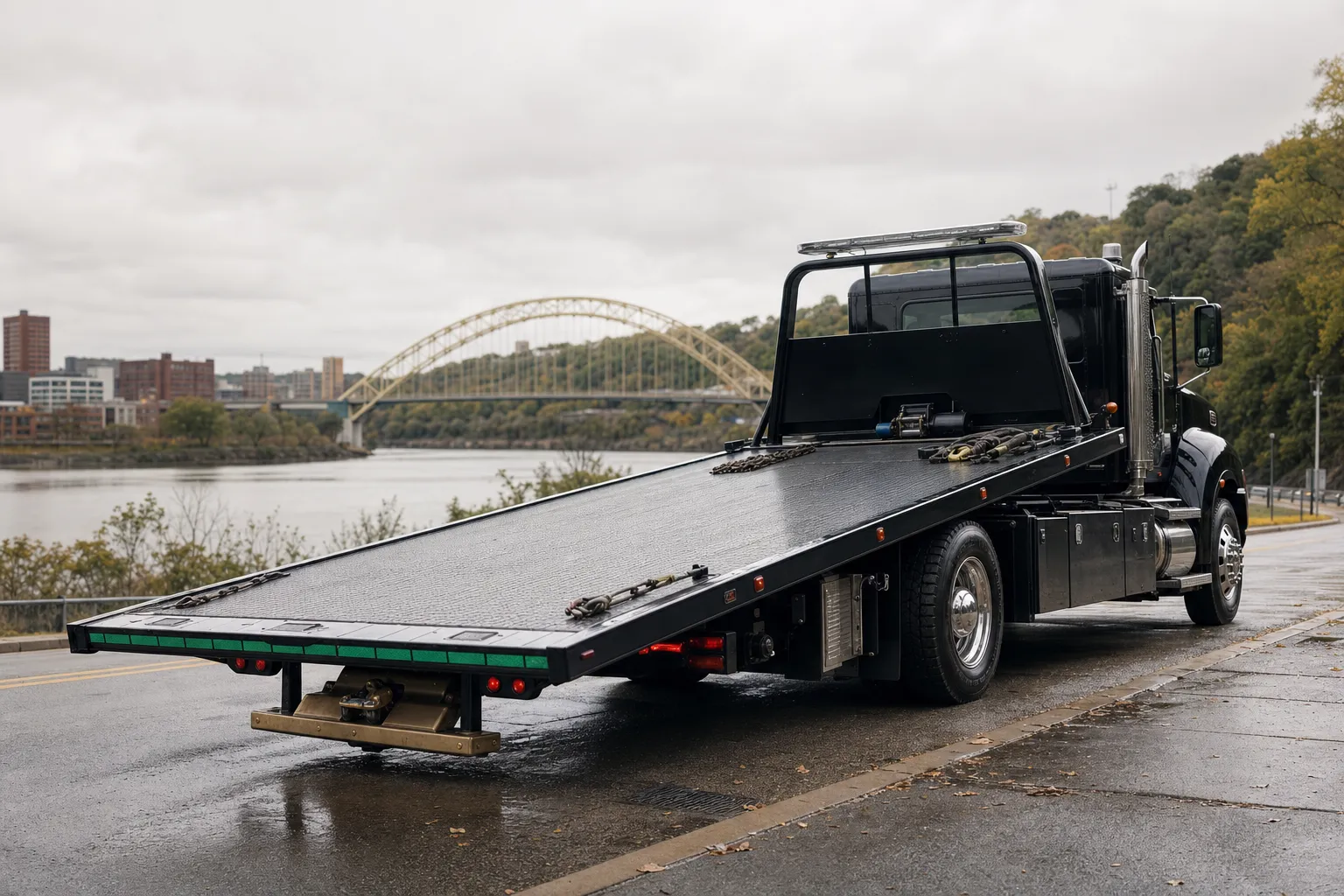
Using the right spare tire matters because temporary spares have clear speed and distance limits and different handling characteristics, and driving on an improper spare can damage your vehicle or create a safety hazard. At Tom Coop LLC Towing and Recovery we explain what spare tires are, when to use them, and how we handle spare tire use during flat tire repair in Collier, Pennsylvania so you can get back on the road safely.
What spare tires are and the main types
Most vehicles carry one of three kinds of spare tires. Knowing which you have affects how you drive after a flat and what repair steps are needed.
- Temporary spare or donut. A compact, lightweight tire intended for short term use only. It saves space and weight but limits speed and distance.
- Full size spare, mounted on a steel wheel. Matches the vehicle tire size and can be used like a regular tire until a repair or replacement is done.
- Run flat tires and emergency mobility kits. Some modern cars have run flats or sealant kits instead of a physical spare. These have their own limits and repair requirements.
Why spare tire use matters locally in Collier
Road conditions, weather, and local travel patterns in Collier and greater Pittsburgh affect how long and how safely you can use a spare. Short residential trips around Collier may be fine on a temporary spare if you follow limits, but highway driving toward downtown Pittsburgh or on I 79 requires more caution. We consider local roads, traffic, and weather when we advise drivers on spare tire use.
Key concepts drivers should know
- Speed and distance limits. Temporary spares are not built for sustained highway speeds or long distances.
- Handling changes. A smaller spare alters steering, braking, and traction, especially in wet or wintry conditions.
- Tire pressure matters. Many temporary spares are stored partially inflated and must be checked before use.
- Wheel and lug torque. Proper mounting and lug torque are required to avoid damage or loss of the wheel.
- Repair versus replacement decisions. A repaired tire may be safe after a puncture in the tread area, but sidewall damage usually requires replacement.
How we handle spare tire use during flat tire repair
We start by assessing the vehicle and the spare. Our process protects your vehicle and respects manufacturer limits.
- Assess the flat and the spare. We check the damaged tire, wheel condition, and what spare is available, including run flat or sealant kit status.
- Confirm compatibility and inflation. We verify the spare matches safe usage guidance and inflate it to the recommended pressure if needed.
- Mount and torque correctly. Our operators mount the spare and torque the lug nuts to manufacturer specifications to prevent vibration or wheel loss.
- Advise on limits and next steps. We tell you speed and distance limits, whether the spare is a temporary spare, and whether you should head to a repair shop or have the vehicle transported.
Pro tip: Keep your vehicle owners manual and spare tire inflator or gauge in the glove box. The manual will tell you your spare type and any manufacturer speed recommendations.
Temporary spare versus full size spare comparison
| Feature | Temporary spare | Full size spare |
|---|---|---|
| Typical use | Short term emergency only | Normal driving until repair |
| Speed and distance | Lower limits recommended by manufacturers | Same as regular tires |
| Handling | Reduced traction and stability | Minimal change in handling |
| Storage and weight | Compact and lighter | Heavier and bulkier |
Manufacturers often advise limiting speed on temporary spares and using them only to reach a repair facility. For specific limits check your vehicle owner manual or a manufacturer guide such as Michelin on temporary spare tires.
Checklist before you drive on a spare
Quick driver checklist
- Verify spare type and condition.
- Check spare tire pressure and inflate to recommended psi.
- Confirm lug nuts are tightened to spec after mounting.
- Limit speed and distance according to your owner manual and spare type.
- Plan to repair or replace the damaged tire rather than relying on the spare long term.
When to call for professional help
If the spare is missing, damaged, or the wheel shows structural damage, you should not drive the vehicle. We provide roadside flat tire repair and safe towing options, and our technicians will advise whether to mount a spare or tow the vehicle to a shop. See our Flat Tire Repair service page for the kinds of roadside support we offer.
Watch out: Driving long distances on a temporary spare can overstress the spare and the vehicle drivetrain. If you are traveling from Collier toward heavier traffic corridors, consider secure transport rather than extended driving on a donut spare.
Related services and links
We handle more than flat tires. If you need fast roadside help we also offer towing, winch out service and jump starts. Learn about our broader towing options on the Types Of Towing topic page. For local coverage and to see where we operate, check our Locations hub.
Helpful external resources
For manufacturer specific guidance consult your vehicle owners manual. General safety information on tire condition and maintenance is available from the National Highway Traffic Safety Administration. For background on towing and recovery concepts see the towing entry on Wikipedia.
Common questions about spare tire use
Below we answer frequent questions drivers have about spares and flat tire repair.
Frequently asked questions
Can I drive on a donut spare to my destination?
You can drive on a temporary spare only for short distances and at reduced speeds as recommended by your vehicle manufacturer. We advise using a temporary spare to reach a nearby repair shop or a safe parking area rather than completing long trips. If you are headed onto faster roads around Pittsburgh, consider professional transport.
How fast can I drive on a temporary spare?
Manufacturers commonly recommend lower speed limits for temporary spares. Check your owner manual for the exact limit. When in doubt, keep speeds low and avoid highway driving until the damaged tire is repaired or replaced.
What if my vehicle has run flats or a sealant kit?
Run flats and emergency sealant kits have different repair requirements. Run flats may allow limited continued driving but can require wheel inspection. Sealant kits are often temporary fixes. We evaluate the system on site and advise the appropriate next step.
Do you mount spares and torque the lug nuts?
Yes. Our technicians mount spares and torque lug nuts to manufacturer specifications. We are licensed and insured and handle mounting to protect the wheel and hub from damage.
Key takeaway
Spare tire use matters because not all spares are equal. Follow manufacturer limits, check tire pressure, and let trained roadside professionals mount and inspect spares when possible to reduce risk and avoid further damage.
Learn more and check our local listing
Read customer feedback and get directions on our Google Business Profile, and explore related pages to learn about towing and roadside assistance options in Pittsburgh and nearby communities.