
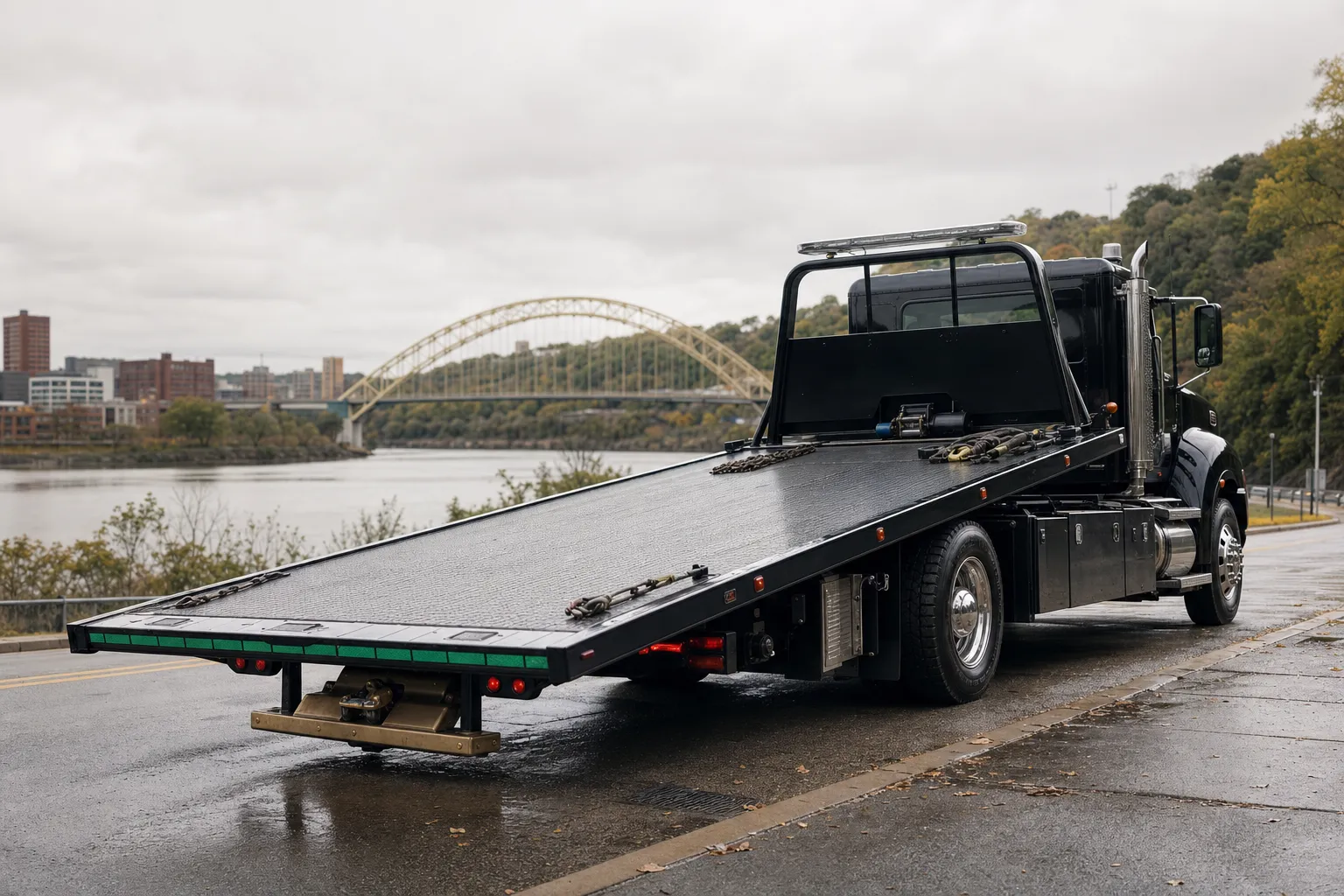
"Before we begin a flat tire repair, ask whether the puncture is in the tread, whether the rim or TPMS is damaged, what repair method is appropriate, and whether roadside repair or towing is the safer choice given your location and weather." That single sentence covers the essential checks we run before any repair. Below we explain what each question means, how it changes the work, and what to expect in Heidelberg, Pennsylvania and nearby Pittsburgh neighborhoods.
What is this topic
Flat tire repair is the assessment and corrective work done when a vehicle loses air because of a puncture, damaged valve, or wheel problem. The assessment determines if the tire can be repaired safely, if a temporary spare or full replacement is needed, or if the vehicle should be towed to a shop for a permanent fix.
Why these questions matter in Heidelberg and the Pittsburgh area
Roadside conditions, traffic patterns, and weather make the choice between a quick roadside repair and a tow important. We operate from Pittsburgh and serve neighboring communities including Heidelberg, so we plan repairs around local roadways, traffic, and safety risks. A repair that is acceptable on a quiet side street may be unsafe on a busy highway or steep hill.
Key concepts to understand before repair
- Tread area versus sidewall damage. Repairs are usually safe for punctures in the tread, not for cuts or bulges in the sidewall.
- Repair methods. Patch and plug techniques differ. A patch applied from the inside is stronger than a surface plug alone; some repairs require removing the tire from the rim.
- Valve stem and rim condition. A slow leak can come from a failing valve or a bent rim. Wheel damage changes the recommended action.
- TPMS and sensors. Modern vehicles use tire pressure sensors that can be affected by service. Reset or replacement may be needed.
- Spare tire compatibility. Knowing whether your spare is full size or temporary affects whether you can drive to a shop safely.
- Roadside versus tow decision. Safety, weather, and location determine whether we repair at the scene or transport the vehicle to a shop.
How repair options compare
| Option | Where we use it | When it is appropriate | Limitations |
|---|---|---|---|
| Plug or external patch | Quick roadside fixes for small tread punctures | Small puncture, no sidewall damage, tire still seated on rim | Not ideal for large holes, sidewall damage, or high speed continuous use |
| Internal patch and plug | Shop or roadside when we remove the tire from the rim | Small punctures in the tread, professional repair needed for longevity | Requires dismounting, not for structural wheel damage |
| Replacement | Shop or dealer | Large punctures, sidewall damage, unrepairable cuts, old or worn tire | Higher cost, time to source a matching tire |
Checklist of questions to ask before any flat tire repair
Before any work begins, confirm
- Is the damage in the tread or the sidewall?
- Is the tire holding air now, or is it flat?
- Is there visible rim damage, bent valve, or wheel separation?
- Do you have a full size spare or a temporary donut spare?
- Is your vehicle in a safe location to work, or is towing safer?
- Does your vehicle rely on a TPMS sensor that may need reset or replacement?
Common questions drivers ask, and how we answer them
Can every puncture be repaired at the roadside? No. Small punctures in the tread often can be repaired on site, but sidewall damage, severe rim issues, or punctures near the shoulder generally require removal and replacement. For those cases we recommend transporting the vehicle to a shop.
How will we know if the wheel is damaged? We look for visible bends, cracks, and leaks at the bead where the tire seals to the rim. If the wheel cannot form an airtight seal or is structurally compromised, replacement is safer than repair.
Will repairing a tire affect TPMS? Repairs and replacement procedures can trigger a TPMS fault. We check sensors and advise if a sensor reset or replacement is needed to restore accurate pressure readings.
Pro tip: If you can safely get out of traffic and park on level ground, make note of whether you have a full size spare. A full spare lets you reach a repair shop without a temporary speed or distance limitation.
Related services that matter for flat tire situations
We coordinate flat tire repair with several other services depending on the situation. For example, if your vehicle cannot be repaired safely at the scene we can arrange towing. If the vehicle is stuck in a ditch or off road we combine our flat tire work with a winch out service. For lock or key issues that arise while changing a spare, see our auto locksmith and car unlock service.
Learn more about our core roadside coverage on the flat tire repair service page and see how it fits with broader options on our types of towing topic page.
Related locations we serve
Tom Coop LLC Towing and Recovery is based in Pittsburgh and provides roadside and flat tire services across the region, including drivers in Heidelberg. For a fuller picture of where we operate, see our service area and location listings on the service area locations page.
Helpful external resources
For general safety and tire maintenance guidance, see the National Highway Traffic Safety Administration tire safety pages. For professional towing and recovery standards, consult the Towing and Recovery Association of America resources.
Key takeaway
Ask whether the puncture is in the tread, whether the wheel or valve stem is damaged, which repair method is appropriate, and whether the scene is safe for roadside work. Those four checks determine whether we repair the tire on site, remove the tire for a proper internal patch, or transport the vehicle for replacement.
Frequently asked questions
How do we decide between a plug and a patch?
We inspect the puncture location and size. Small tread punctures sometimes get a plug for a temporary fix, but a professional internal patch combined with a plug is the preferred repair for long term safety. If the tire must be removed from the rim to assess the damage, we explain why and recommend the stronger repair option.
Is a spare tire safe to drive on for long distances?
Temporary spare tires often have speed and distance limits set by the vehicle manufacturer. If you have a full size spare, you can typically drive to a shop normally. We advise following your vehicle handbook and offer towing when a temporary spare is the only option or when road conditions make driving unsafe.
Will we check and reset TPMS after a repair?
Yes. We check TPMS sensors as part of the repair process and advise on sensor diagnosis or reset steps. Some sensor issues require a visit to a tire shop or dealer for replacement.
When should I choose towing instead of roadside repair?
Choose towing when the vehicle is on a busy road, when there is rim or structural wheel damage, when the spare is not compatible, or when weather and visibility make on site work unsafe. Towing moves the vehicle to a controlled shop environment for a complete inspection and repair.
Where to go next
Check our Google Business Profile to view photos, read recent reviews, and get directions. To learn more about our services, see our flat tire repair page and our topics pages about types of towing and roadside safety.