
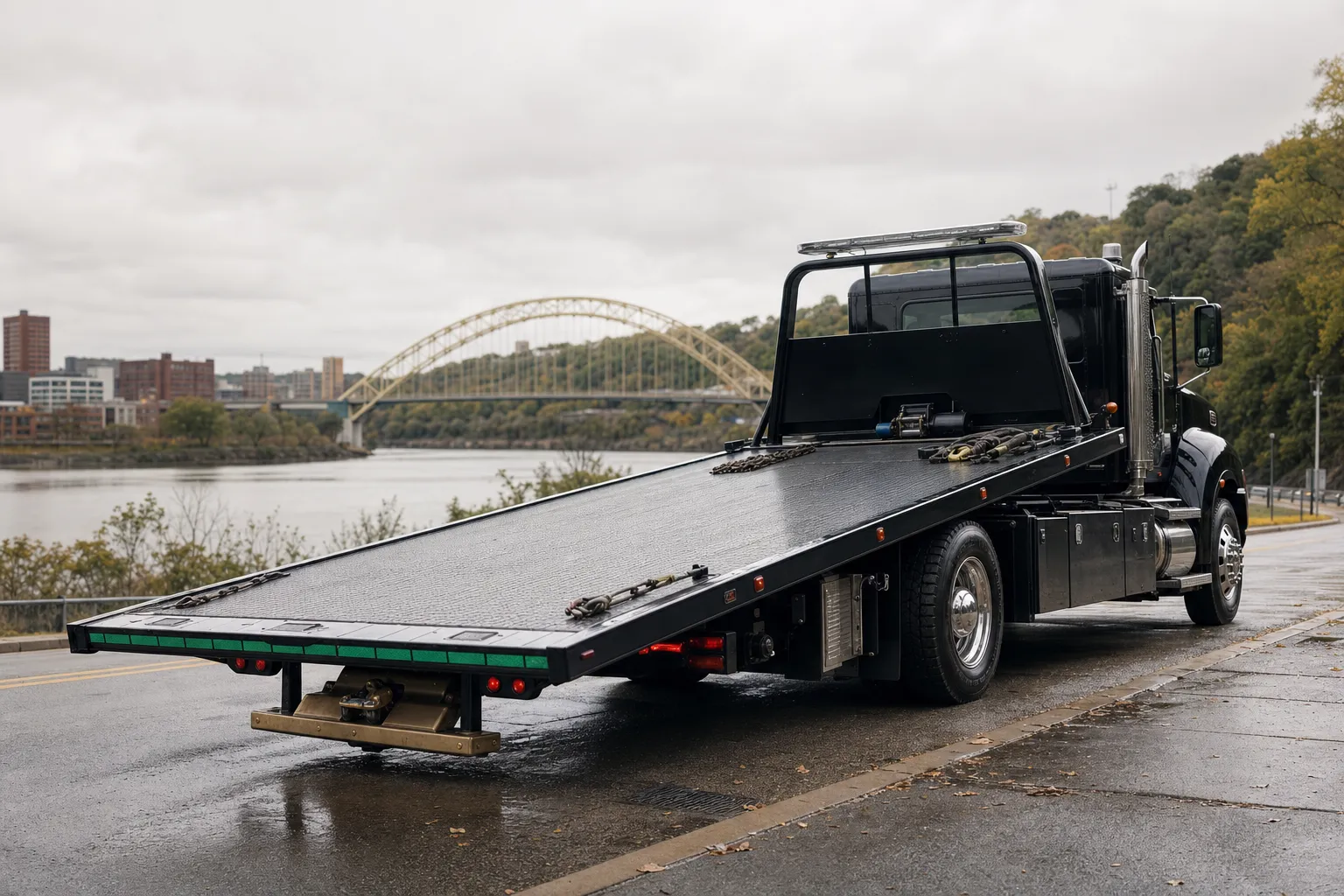
We recommend reviewing your roadside emergency preparations before any tow because it reduces damage risk, speeds recovery, and helps our operators handle your vehicle safely. Preparing ahead protects you, other road users, and your vehicle when a tow or winch out becomes necessary in West Homestead.
What preparing for roadside emergencies means
Preparing means three things. First, it means checking what you already carry in your car, like a tire kit, jumper cables, and an emergency triangle. Second, it means knowing what to do at the scene, for example how to position your car and when to stay inside or move to a safer spot. Third, it means understanding how towing or a winch out will affect your vehicle so you can make informed choices with the crew on site.
We also include practical steps that make a tow faster and safer, such as leaving personal items where they are to avoid delaying recovery and noting any aftermarket parts or low ride height that affect how we secure and tow your vehicle.
Why this matters in West Homestead
West Homestead sits along the Monongahela River and sees a mix of local traffic, commuter routes, and occasional heavy truck movement. Roadside conditions vary from narrow residential streets to highways like I 376 and state routes that feed into Pittsburgh. Those differences change the risks and the time it takes for a tow truck to arrive and recover a vehicle.
We handle towing and recovery across Pittsburgh and nearby neighborhoods. When you review your roadside preparations before towing, you reduce on scene time, reduce risk to other drivers and first responders, and help our operators protect your vehicle and property.
Key concepts to know
- Safe scene management. How to park, warn other drivers and choose a safe waiting spot.
- Vehicle condition matters. Low clearance, aftermarket suspension, salvage titles, or flat tires affect how we rig and tow a vehicle.
- What a tow does and does not fix. Towing moves the vehicle. It does not diagnose mechanical faults or repair damage.
- Winch out limits. Winch recovery can free stuck vehicles, but it has weight and anchor constraints depending on terrain.
- Key and lock issues. If you lock keys inside, a car unlock service can sometimes avoid a tow.
What to check before a tow
Roadside readiness checklist
- Confirm you and your passengers are safe away from traffic.
- Note any exterior damage, loose parts, or low clearance areas.
- Keep the vehicle in park with the parking brake applied if safe to do so.
- Tell us if the vehicle has after market wheels, lift kits, a trailer hitch, or is a motorcycle.
- Gather important documents and keys if they will travel with the vehicle.
- Have your vehicle identification details ready, like make, model and color.
Pro tip: If you have run flat tires or a repaired or spare tire, tell us. That information affects whether we tow, perform an on site flat tire repair, or use a flatbed.
How reviewing preparations affects the tow process
When you review the scene and your vehicle, our crew can choose the safest method faster. We may use a flatbed for low clearance cars, a wheel lift for quick roadside moves, or a winch out for stuck vehicles. Knowing whether a vehicle has transmission issues, a manual transmission, or a damaged wheel helps us pick equipment and reduce handling time.
For example, winch out jobs sometimes require an anchor point. If you can describe the terrain and obstacle, we can bring the right rig. If keys are locked inside, an auto locksmith or car unlock service can remove the lockout and avoid a tow in many cases.
Common choices and tradeoffs
| Option | When to choose it |
|---|---|
| Flatbed tow | Best for low clearance cars, all wheel drive vehicles and when you want minimal movement of the drivetrain. |
| Wheel lift tow | Faster on site and often used for short local moves with clearly accessible tires. |
| Winch out | Used when a vehicle is stuck in mud, snow or off road and needs to be pulled to solid ground before a tow. |
What we do on arrival
When our operator arrives, we confirm the situation, ask about the vehicle details listed above, and check the scene for safety hazards. We will secure the vehicle according to condition and chosen method. Our goal is to protect your vehicle, prevent further damage, and minimize traffic disruption.
Operators are trained to protect property. If a vehicle has aftermarket parts or is loaded with heavy cargo, we pause to plan the lift or anchor. That planning can add a few minutes, but it prevents damage and keeps everyone safe.
Common questions drivers ask
Will reviewing my kit stop a tow
Sometimes. If the issue is a flat tire and you have a usable spare, or if the keys are locked inside and our car unlock service can reach the lock without damage, you may avoid a tow. If the vehicle is unsafe to drive, or there is mechanical damage, a tow will still be necessary.
Should I move my vehicle onto the shoulder
Move it only if you can do so safely. If moving the vehicle risks traffic or causes more damage, stay put and wait for help in a safe position outside the travel lanes.
What to tell the operator first
Tell us the vehicle make, model, any modifications, whether the vehicle can roll freely, and whether keys or documentation will travel with the vehicle. Also mention nearby hazards like steep grades, soft ground or water.
Related services we offer
We provide towing and a range of roadside services in Pittsburgh and surrounding neighborhoods. If you need a tow, our towing page explains the options we use. For locked keys, see our Car Unlock Service. For stuck vehicles, our Winch Out Service details how we recover vehicles from ditches, mud or soft ground.
We also offer jump starts, flat tire repair and auto locksmith support. Where a mechanical issue needs a shop stop, we can tow your vehicle to a trusted repair location or a secure storage area while you arrange repairs.
Related locations and routes
We operate from Pittsburgh and regularly serve West Homestead, Munhall, Homestead and surrounding boroughs. Routes like Lincoln Avenue, Route 51 and nearby ramps to I 376 see varied traffic patterns. Knowing the road you are on helps us estimate arrival time and choose the right truck for the route.
For a list of where we work and directions, check our locations page and plan accordingly.
Helpful resources and next steps
Before an incident, keep a simple roadside kit in your trunk. A basic kit helps you wait safely and gives us the information we need if a tow is required.
- Gather essentials. A reflective triangle, basic tool kit, flashlight with fresh batteries and a first aid kit are useful. Keep jumper cables or a portable battery starter on hand.
- Document vehicle details. Note the make, model, year and any special modifications or equipment that affect towing.
- Plan a meeting spot. If you are part of a fleet or traveling with others, designate a safe waiting location off the roadway.
We recommend reviewing local rules for roadside safety. Local and state transportation departments publish guidance on safe waiting and warning device placement.
Key takeaway
Reviewing your roadside emergency preparations before a tow reduces risk, shortens on site time and helps our operators protect your vehicle. Small steps like noting modifications, keeping a simple kit and telling the operator the correct vehicle details improve outcomes for everyone.
Frequently asked questions
What should I do if my car will not start on a busy road
Move the vehicle out of the travel lane if it is safe to do so. If you cannot move safely, stay in the car with seatbelts on until help arrives or move to a safe area off the road. Notify oncoming traffic if you have a reflective triangle and use hazard lights when safe.
Can a lockout be resolved without towing
Often yes. Our Car Unlock Service can open many locked vehicles without damage. If access is possible and the vehicle is otherwise drivable, you may not need a tow.
When is a winch out necessary
Winch out is needed when a vehicle is stuck off road, in mud, or in a ditch and cannot be driven back onto solid ground. Terrain, vehicle weight and anchor options determine whether a winch out is feasible on site.
What should I tell the operator about aftermarket parts
Tell us about aftermarket wheels, lift kits, spoilers or body modifications. Those items change how we secure and transport your vehicle and affect the choice of tow method.
Does preparing prevent damage during towing
Good preparation reduces the chance of avoidable damage. Clear information about the vehicle condition and secure loose items before the tow help our operators lift and tie down the vehicle correctly.
Where to learn more or check our reviews
Please check our Google Business Profile for directions and customer reviews, and read more about related topics on our site. For service details see our towing services page, practical safety tips on the roadside safety tips page, and our locations page to confirm service areas.
Tom Coop LLC Towing and Recovery operates from Pittsburgh and serves West Homestead and nearby communities with towing, recovery and roadside assistance.