
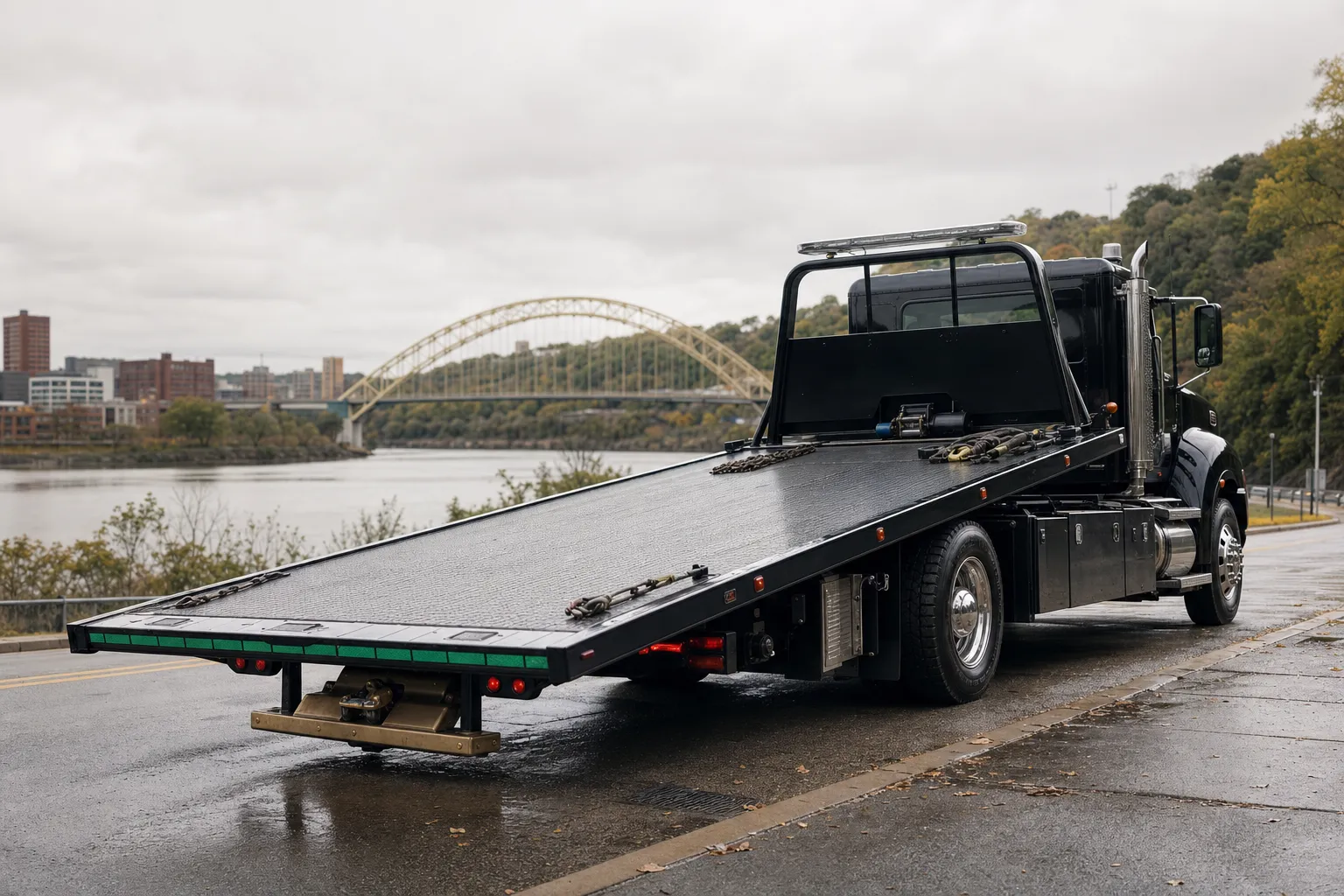
Long distance transport is often more complicated than drivers expect because vehicle condition, legal rules, and logistics all affect how a vehicle can move safely over many miles. At Tom Coop LLC Towing and Recovery we plan each long distance job around the vehicle, the route, and any special handling the vehicle needs so the transport is safe and compliant.
How long distance transport differs from a local tow
Moving a vehicle across town is not the same as moving it across several counties or states. For long distance work we consider factors that usually do not matter on a short tow, including securement methods for long highway runs, fuel and driver regulations for commercial trucks, and scheduled handoffs at nonstandard pickup or delivery locations.
- Vehicle condition: disabled, running, or wrecked vehicles require different equipment.
- Tow method: flatbed, wheel lift, or dolly changes loading and securement needs.
- Permits and insurance: some loads need permits or special coverage for interstate travel.
- Route planning: bridges, low clearances, and restricted roads matter over longer distances.
Key factors that add complexity to long distance transport
Vehicle type and condition
The vehicle we move determines our approach. Low profile sports cars, vehicles with aftermarket bodywork, motorcycles, heavy duty trucks, and vehicles with severe collision damage all require different handling and securement. A running car can be driven onto a flatbed. A total loss often needs extra lifting and bracing so it does not shift during a long highway trip.
Towing method and equipment
Choosing between a flatbed, wheel lift, or dolly affects price, speed, and risk. Flatbeds are the safest for long distance transport because they keep the vehicle off the road surface. Wheel lifts can work for short and mid range moves, but they increase wear on the towed vehicle. For specialty cars or fleet moves we decide the equipment based on what protects the vehicle best for the mileage involved.
Securement and cargo rules
Vehicles must be secured for continuous highway speeds. That means approved tie downs, edge protection, and, for commercial carriers, compliance with federal cargo securement rules. We follow manufacturer recommendations when available and use heavy duty straps and wheel nets to prevent movement over long distances.
Permits, registrations and route restrictions
Long hauls can cross jurisdictions that have weight limits, bridge restrictions, or seasonal road closures. In some cases we need oversize permits or to choose a route that avoids low clearances. Route planning is part of the job when the delivery point is not on an interstate.
Insurance and liability considerations
Insurance terms for long distance moves can differ from short local tows. We document vehicle condition before pickup, note existing damage, and confirm the level of coverage needed for a long distance move so there are clear expectations for liability and claims handling.
Timing, handoffs, and coordinated delivery
Long distance moves may include handoffs between operators, timed deliveries to dealerships, or specific delivery windows for auctions or exports. Each additional transfer point adds risk and coordination work, so we plan handoffs to minimize handling and paperwork.
Weather and seasonal risks
Snow, ice, high winds, and heavy rain change route choices and loading procedures. We monitor conditions on long runs and adjust schedules or equipment to protect vehicles during adverse weather.
Regulations, standards, and manufacturer guidance we follow
We base handling decisions on a combination of federal guidance for cargo securement, vehicle manufacturer towing instructions, and practical recovery experience. The National Highway Traffic Safety Administration explains general towing safety considerations, and industry securement rules guide how we fasten loads for highway transport. For damage prone vehicles we also consult the vehicle owner manual when available.
For background on towing terminology and common practices, see the Wikipedia entry on towing for general definitions and context: Towing on Wikipedia. For federal cargo securement guidance that applies to commercial carriers, refer to the Federal Motor Carrier Safety Administration securement rules and guidance at the FMCSA website: FMCSA cargo securement. For manufacturer specific towing recommendations check the vehicle owner's manual or the vehicle maker's published towing guidelines.
How we approach planning a long distance transport job
- Assess the vehicle. We inspect the vehicle for running condition, structural damage, and any aftermarket parts that need special care.
- Choose equipment. We select a flatbed, wheel lift, or enclosed carrier based on the vehicle and the route.
- Plan the route. We pick a course that avoids low clearances and heavy restrictions and that supports safe continuous travel.
- Confirm paperwork and insurance. We document condition, verify coverage, and prepare any required permits.
- Schedule handoffs. If the move needs intermediate transfers we set clear times and minimize handling points.
- Secure and inspect. Before departure we secure the vehicle with approved tie downs and perform a final inspection and photo record.
Pro tip: If you plan to move a specialty car or a vehicle with loose bodywork, tell us the details up front. Advance notice helps us bring the right rig and packing materials for a safer transport.
Watch out: Leaving personal items inside a vehicle during long transport can increase damage risk. Loose objects can shift and cause interior or exterior dents over highway miles.
What owners should do before a long distance transport
Preparing the vehicle reduces risk and delays. Below is a practical checklist you can use before pickup.
Owner checklist for long distance transport
- Remove or secure loose items inside the vehicle.
- Note and photograph existing damage and mileage.
- Disable any alarm so it does not activate during loading.
- Confirm keys and any required paperwork are available at pickup and delivery.
- If the vehicle is not drivable, note access obstacles at the pickup site.
- Inform us about aftermarket spoilers or ground effects that affect loading.
Common complications we fix on long runs
- Vehicles with locked steering or parking brakes that need an auto locksmith to unlock before loading. We coordinate auto locksmith work when needed, see our Car Unlock Service.
- Large fleets that require staged pickups and consolidated manifests for dealership or auction deliveries. We schedule to reduce handling and keep timelines tight.
- Damaged vehicles with bent frames that need winching and bracing before highway transport. Our winch out and recovery training helps manage these risks safely.
How geography and local rules affect moves into and out of Brentwood
Brentwood sits inside the Pittsburgh metro area where narrow streets, tight residential driveways, and local parking ordinances can affect pickup and delivery. For in town work we sometimes stage at a neutral lot or arrange short distance shuttles to the main carrier. For longer interstate moves we plan the first and last mile so the load can reach a highway access point safely.
For an overview of our long distance work and to learn more about the process we follow, see our Long Distance Transport resource: Long Distance Transport. To read about our towing capabilities and equipment types, visit our towing service page at Towing. For more about where we operate and our local service area, see our main location page at Tom Coop LLC Towing and Recovery in Pittsburgh.
Pros
- Experienced recovery and long haul planning.
- Equipment choices to protect vehicles for highway travel.
- Coordination with locksmith and storage services when needed.
Cons
- Long runs require more coordination than local tows.
- Special vehicles may need extra handling time or equipment.
Key takeaway
Long distance transport becomes complicated because vehicle condition, tow method, route restrictions, and documentation all matter. We handle those details for Brentwood and Pittsburgh moves so vehicles arrive safely and on schedule.
Frequently asked questions
What determines whether a flatbed or wheel lift is better for a long distance move?
Vehicle clearance, damage level, and the distance determine the best method. We prefer flatbeds for long highway runs because they remove the vehicle from road vibration and reduce wear. Wheel lifts can work when a vehicle is running and the distance is shorter, but they are not ideal for high mileage interstate runs.
Do you need permits for long distance towing out of Pennsylvania?
Most standard passenger vehicles do not require oversize permits, but loads that exceed dimensions or weight limits do. Route restrictions vary by state and local authority. We check for any permit needs during planning and arrange them when required.
How should I prepare a nonrunning vehicle for pickup?
Clear the area around the vehicle for safe access, take photos of existing damage, make sure the vehicle is unlocked or coordinate an automotive locksmith if the keys are not available, and tell us about any parts that may be loose or missing.
What is the difference between long distance transport and vehicle recovery?
Recovery focuses on safely removing a vehicle from an incident site, possibly with winching and structural stabilization. Long distance transport focuses on moving a vehicle over many miles with securement and route planning. Many jobs require both skills; we provide recovery and long haul transport together when needed.
Learn more and check our local profile
For details about our long distance transport work and related services see our Long Distance Transport overview and our main towing service page. You can also check Tom Coop LLC Towing and Recovery on Google to read recent reviews and find directions for pickup or delivery.