
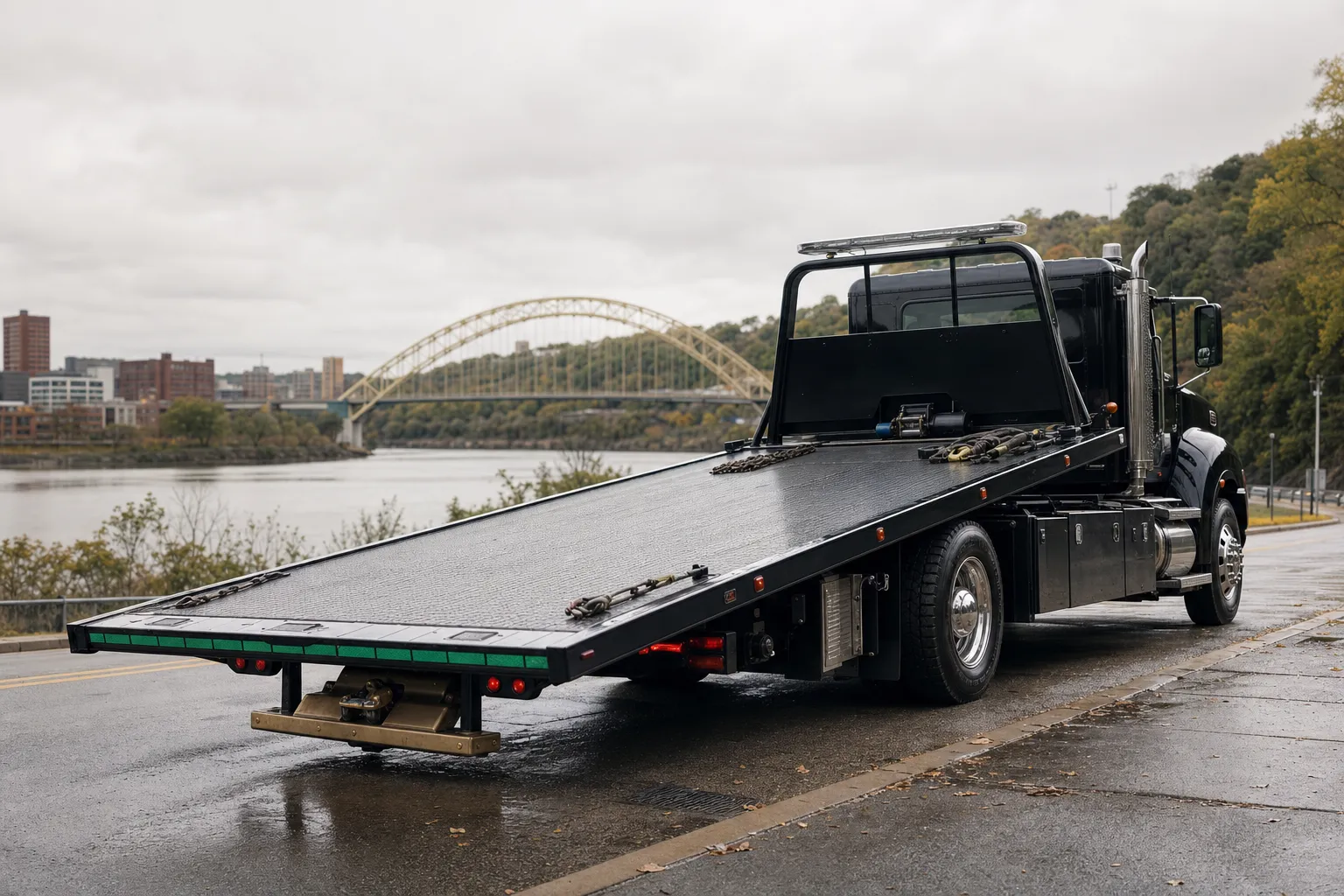
Why slope recovery matters for a flat tire
On a slope, changing a flat tire is often more dangerous and technically complex than on level ground. We assess slope angle, vehicle stability and traffic exposure first, and then decide whether a safe winch out or a tow is the right move instead of an on scene flat tire repair.
In plain terms, if the vehicle cannot be stabilized on level ground we will usually recover it to a safe spot or tow it where a tire change can be completed safely.
How slopes change the risks and choices
Vehicle stability and jack failure risks
A jack placed on a slope can slip or shift as the vehicle rises. That puts anyone beside the car at real risk. We look for level staging areas, use wheel chocks and, when needed, a winch or flatbed to remove the vehicle from the slope before attempting a tire change.
Wheel and rim damage on uneven ground
Raising a vehicle on an incline concentrates loads on a single corner. That can bend wheels, crack alloy rims or make a spare unusable. If we see rim or wheel damage, we prioritize moving the vehicle to a repair shop rather than forcing a roadside repair.
Traffic exposure and scene safety
Roadside work on a slope is often close to traffic, curves or low visibility. Our operators stage the scene to protect workers and other road users. When traffic control cannot be provided safely, towing or a winch out is a safer way to handle the flat tire.
How we handle a flat tire on a slope
- Assess the scene. We look at slope angle, ground surface, traffic and whether the spare and jack are usable.
- Stabilize the vehicle. We set the parking brake, place wheel chocks and use additional supports or straps if the surface is soft.
- Choose recovery or repair. If the vehicle can be made safe on site we do the flat tire repair. If not, we perform a controlled winch out or tow to a level area for service.
- Protect the vehicle and occupants. We follow procedures to prevent further vehicle damage and to minimize risk to passengers and bystanders.
- Document and communicate. We note damage, describe options and coordinate next steps with drivers, fleet managers or repair shops as needed.
We are licensed and insured, and our operators are trained to handle slope recoveries and the related decisions about flat tire repair safely.
When we will not change a tire at the scene
There are clear situations where an on scene flat tire repair is not the right option. We will choose a tow or a winch out when any of the following apply.
- Ground is unstable or too steep to safely use a jack
- There is visible rim or wheel damage that could make a spare unsafe
- Traffic, blind corners or low visibility put workers at risk
- The vehicle is partially off an embankment or trapped in soft ground
- The spare is incompatible with the vehicle or missing necessary hardware
Winch out versus towing for slope recovery
A winch out and a tow are both tools we use for slope recovery, but they serve different circumstances. A winch out is a controlled pull to bring a vehicle back to stable ground. A tow moves the vehicle to a repair facility or secure storage.
We decide between them based on slope conditions, the vehicle weight and damage, and nearby access. Learn more about the technical differences on our types of towing page Types Of Towing.
What drivers should do when they have a flat on a slope
Immediate safety checklist
- Move to a safe location if you can do so without driving on a flat
- Turn on hazard lights to improve visibility
- Set the parking brake and place wheel chocks if available
- Stay away from traffic and downhill slopes while waiting
- Keep children and pets inside the vehicle or in a safe area
If you need professional help, our 2/7 Roadside Assistance team provides on scene support and recovery options. For details on our flat tire work see our Flat Tire Repair service page Flat Tire Repair.
Watch out: Attempting to jack a vehicle on an incline increases the risk of the jack slipping and serious injury. If the car cannot be stabilized on level ground we recommend waiting for trained recovery personnel.
How we protect vehicle condition during slope recovery
Protecting the vehicle is a primary concern. Our operators use rated straps, soft loops over secure towing points and skid plates when necessary. We avoid attaching equipment to suspension parts or unsecured body panels.
If storage is needed after recovery we can arrange secure short term storage and coordinate next steps with repair shops or fleet managers. That helps reduce the chance of additional wheel or tire damage after the recovery.
Examples from our work in the Pittsburgh area
We handle slope recoveries across Pittsburgh and nearby communities including calls from steep local roads and suburban ramps. Typical scenarios include a compact car stopped on a roadside bank, a light truck with a blown tire stuck in soft shoulder, and vehicles partially off small embankments requiring a winch out.
In each case we follow the same process: assess, stabilize, recover, and then decide whether a roadside tire change is appropriate or a tow to a shop is safer. Our fleet and training allow us to manage both light duty and heavier recovery jobs efficiently.
Common misconceptions
- Misconception: It is faster to change the tire wherever the vehicle stopped. Reality: Working on a slope can take longer and is more dangerous, which is why recovery first is often faster overall.
- Misconception: Any spare will work for a short drive. Reality: A damaged rim or incompatible spare can be unsafe, and we will not put a vehicle back on the road if the spare is not appropriate.
- Misconception: Winch out means more damage. Reality: A properly planned winch out protects the vehicle and avoids the greater risk of uncontrolled rollback or further impact.
Key takeaway
On slopes the safest course is often a controlled recovery or tow rather than a roadside tire change. We evaluate stability, traffic and wheel condition first, stabilize the scene, and then either repair the tire safely or move the vehicle to level ground for service.
Frequently asked questions
Can you change a flat tire on a hill?
We may change a tire on a slope only when the vehicle can be made safe on site with chocks and supports. If the slope or traffic makes the scene unsafe we will perform a winch out or tow the vehicle to a level area before repairing the tire.
What is a winch out and when is it needed?
A winch out is a controlled pull that brings a vehicle back onto stable ground. We use it when a vehicle is off the roadway, partially down an embankment, or the surface will not allow safe use of a jack.
Will a winch out damage my car?
When done correctly, a winch out avoids further damage. We attach equipment to rated recovery points and avoid pulling on suspension or body panels. Our goal is to protect the vehicle while restoring it to a safe position.
Do you tow vehicles after a slope recovery?
Yes. If the vehicle cannot be repaired safely on site, or if wheel or rim damage is present, we tow to a repair facility or secure storage. We coordinate with drivers, fleet managers and repair shops as needed.
What should I do while waiting for help?
Move to a safe area away from traffic, keep hazard lights on, set the parking brake, and stay clear of the downhill side of the vehicle. We also recommend keeping a basic roadside kit in the car for emergencies. For more roadside best practices see our Roadside Safety Tips topic Roadside Safety Tips.
Learn more and check our local profile
Read customer reviews and get directions on our Google Business Profile, and learn more about our services and service area on the site.