
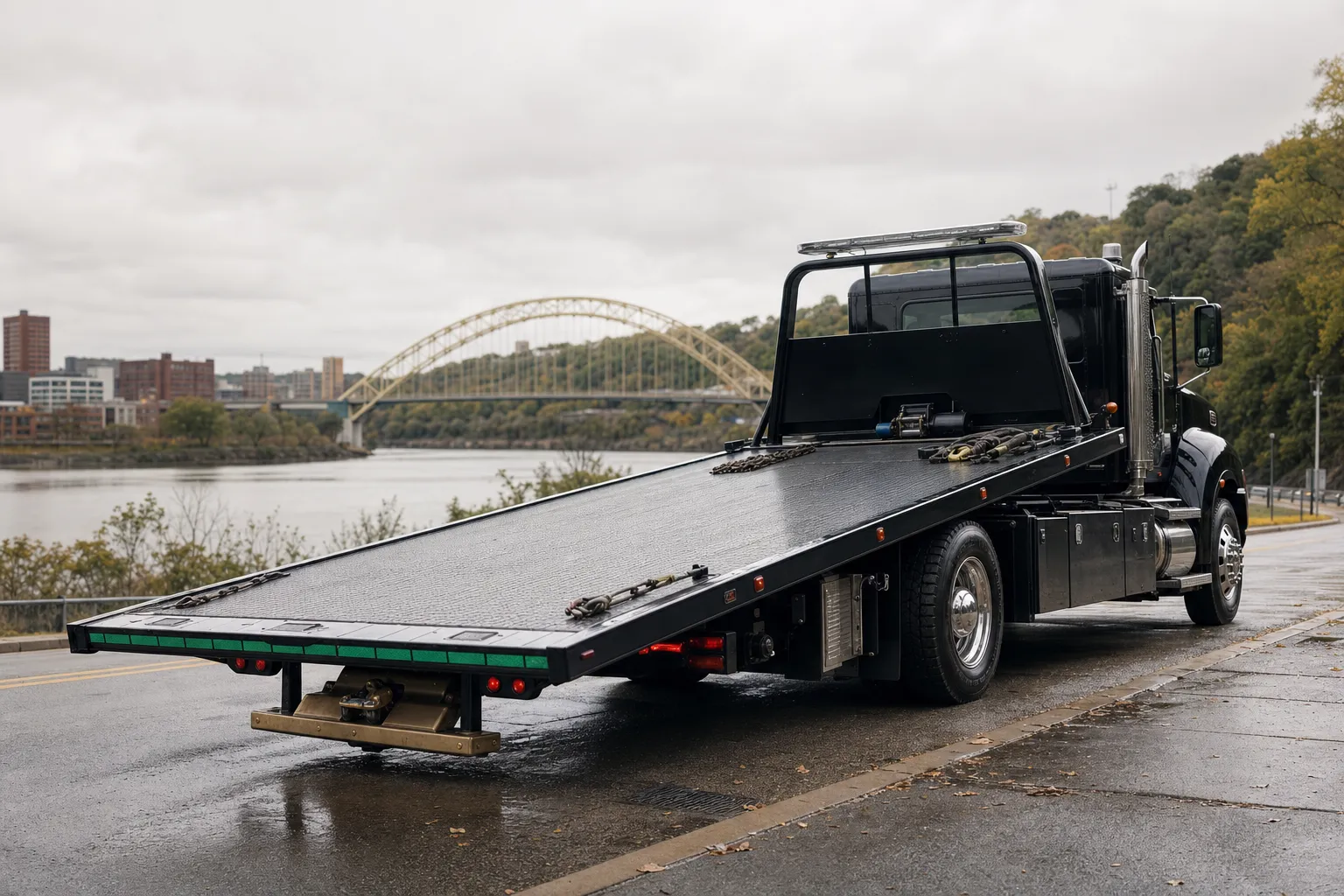
Direct answer: Towing cost in Green Tree depends on a few clear factors we can describe precisely: the hookup or base fee, the per mile rate, vehicle size and condition, time of day, and any special recovery work such as a winch out or heavy recovery. We calculate estimates the same way whether the job is a local tow, a flatbed transport, or an accident recovery.
What a towing cost guide covers
A towing cost guide explains the pieces that add up to a tow bill and the choices you will make when you need help on the road. For drivers and fleet managers in Green Tree and nearby Pittsburgh neighborhoods, that means understanding how distance, equipment, and handling affect final cost, and what good service looks like from a professional provider.
We wrote this guide to help you read an estimate, compare options, and know what to have ready when a tow is needed. For more background on towing services we offer, see our Towing service page at Tom Coop LLC Towing and Recovery.
Why towing costs matter locally
Costs vary by market. Green Tree sits inside the Pittsburgh metro area where traffic, recovery difficulty, and municipal rules can change how a job is priced. A short, simple hookup downtown is not the same as a recovery from a hillside in a nearby suburb. Knowing the components of cost helps you make better choices and avoid surprises.
We serve private drivers, commercial fleets, and dealerships throughout Pittsburgh. When a tow involves a dealership transfer or vehicle export logistics, different handling and paperwork can affect labor and storage time.
Key cost drivers
- Base hookup fee. This covers arrival, securing the vehicle, and the initial labor to prepare the tow.
- Per mile charge. Most local tows include a per mile rate once the vehicle is on the truck.
- Vehicle type and weight. Heavier vehicles need different equipment and more crew time.
- Recovery complexity. Winch outs, rollovers, or damaged steering increase labor and equipment needs.
- Equipment type. Flatbed loads, dollies, or wheel lift work change handling time and vehicle protection needs.
- After hours and holiday work. Limited availability and higher labor rates can apply outside standard hours.
- Storage and administrative fees. Secure storage, release paperwork, or towing company hold times can create additional charges.
- Permits and municipal rules. Some recovery locations require permits or liaison with property managers or authorities.
How we calculate an estimate
- Job intake. We ask for vehicle type, location, and the condition of the vehicle. Photo attachments are helpful for unusual recoveries.
- Determine equipment. Based on vehicle weight and location we choose a flatbed, wheel lift, or heavy recovery rig.
- Assess access and risk. Tight spaces, steep grades, or obvious damage add crew time and safety measures.
- Apply base fee and mileage. The base hookup fee covers arrival and prep, then we add a per mile rate for the transport portion.
- Include extras. Winch work, long distance transport, storage, and after hours premiums are added when applicable.
Estimates are a projection based on information available at intake. Final charges reflect actual time and equipment used on scene.
Comparing common towing options
| Towing option | When to choose it | Vehicle types | What to expect |
|---|---|---|---|
| Local light duty tow | Short trips to a repair shop or home | Passenger cars and small SUVs | Quick hookup, lower mileage charge, wheel lift or flatbed available |
| Flatbed transport | Damaged vehicles, specialty cars, or long distance moves | Low clearance cars, luxury models, motorcycles | Better vehicle protection, slightly higher base and mileage |
| Winch out recovery | Stuck vehicles in ditches or soft ground | All sizes, may require additional anchors | Extra labor and equipment, safety rigging, possible access fees |
| Heavy recovery | Large trucks, rollovers, complex recoveries | Medium and heavy trucks, commercial equipment | Specialized rigs, more crew, time intensive |
What to prepare before a tow
Documents and items to have ready
- Vehicle registration or title if retrieval requires ownership verification
- Keys or a clear note about where the keys are stored
- A quick inventory of personal items to remove before we load the vehicle
- Photos of damage or the vehicle position if it is safe to take them
- Any special instructions about aftermarket lifts, oversized tires, or nonstandard fuel types
For motorcycle owners and dealerships we handle tie down and transport carefully, and we match equipment to the vehicle. See our topics on vehicle entry safety and on choosing towing types for more context.
Common billing questions and terms
- Hookup fee vs base fee. The initial charge for arrival and securing the vehicle, charged once per job.
- Per mile rate. Applied after the hookup portion of the job, usually on the odometer route or straight line distance depending on local practice.
- Idle time and waiting charges. When situations require extra on scene time, a per hour labor charge may apply.
- Storage day rate. Secure storage is billed per day after the tow if the vehicle remains on company property.
- After hours premium. Work performed during nights, Sundays, or holidays may include higher labor rates.
Red flags and common misunderstandings
Watch out for estimates that leave out clear descriptions of what is included. Not all tows are the same. An advertised low per mile rate may pair with a high base fee or limited equipment, which increases final cost for complex recoveries.
Watch out: If a job needs a flatbed and the estimate assumes a wheel lift, the final bill will reflect the correct equipment. Clarify vehicle type and condition up front to get the most accurate projection.
How local factors affect price in Green Tree and Pittsburgh
Traffic patterns, construction, and municipal towing rules in the Pittsburgh area influence travel time and permits. Some properties in the metro area require property manager coordination. For accident towing, coordination with insurance adjusters and repair shops can add handling steps.
We work regularly with dealers, insurance adjusters, and property managers across Pittsburgh to keep handling efficient. For related topics about accident towing and long distance transport, see our articles on Accident Towing Options and Long Distance Transport.
What good service looks like
- Clear communication about what is included in the estimate
- Appropriate equipment matched to the vehicle and site
- Trained operators who protect vehicle finishes and property
- Secure storage when needed, with straightforward release procedures
We focus on professional customer care and safe handling on every job. Operators are trained to protect property and minimize disruption, and our fleet is equipped to manage both light duty and heavier recovery jobs efficiently.
Examples of situations and likely cost elements
These are illustrative scenarios to show how components add up, not price quotes.
- Simple local tow to a shop. Base hookup fee plus short mileage. Minimal labor and no extra equipment.
- Winch out from a ditch at night. Hookup fee, winch out labor, possible additional crew for safety, after hours premium, and transport mileage if carrying to a shop.
- Flatbed long distance transfer. Higher base for flatbed handling, per mile transport charge over distance, possible overnight crew shifts and secure storage if timing requires.
How we keep costs fair and transparent
We describe what we will do on scene, the equipment we plan to use, and the likely time to complete the job. That makes it easier for you or a fleet manager to compare options and make an informed choice. For more about the kinds of towing we perform, visit our Types Of Towing topic page.
Pro tip: If a vehicle is severely damaged or immobile, request a flatbed or heavy recovery right away. That avoids multiple moves and extra handling charges.
Who pays for a tow and how claims affect billing
Payment can come from the vehicle owner, the responsible party, or an insurer depending on the situation and policy. For incident tows, insurance adjusters often coordinate releases and billing details. We work with insurance partners and repair shops to streamline those procedures, but the billing elements remain the same: hookup, equipment, labor, mileage, and any storage.
For public statistics that describe industry employment and wage patterns for towing and recovery workers, see data from the Bureau of Labor Statistics.
Related services and pages
We offer a range of roadside and locksmith services that affect immediate costs and options: Car Unlock Service, 2/7 Roadside Assistance, Auto Locksmith services, Winch Out Service, Flat Tire Repair, and Jump Start Service. Learn about each on the corresponding service pages listed in our site navigation, including our Towing service page.
For practical steps on how to act during a roadside event, visit our Roadside Safety Tips and When To Call Roadside pages. For specific guidance about car unlock pricing and keyless entry issues, see our Car Unlock Costs and Keyless Entry Issues topics.
To read other articles collected here, go to our Topics hub for a full list of guidance and resources.
Frequently asked questions
How much does a tow cost in Green Tree?
Costs vary by the factors explained above: base hookup fee, per mile rate, vehicle size, and recovery complexity. Because conditions differ, we describe the components you will see on a bill rather than publish a single price that could be misleading.
Will my insurance cover towing?
Coverage depends on your policy. Some policies include roadside assistance or towing, others do not. If a carrier authorizes a tow directly, billing and release are coordinated with that carrier. We can provide documentation needed for claims processing.
What is the difference between a flatbed and a wheel lift tow?
A flatbed carries the entire vehicle on a level bed and is preferred for damaged, low clearance, or specialty vehicles. A wheel lift supports the vehicle by the tires and is efficient for quick local moves of undamaged cars. Flatbeds generally take more handling and may carry a slightly higher base charge.
Do you offer long distance transport?
Yes. Long distance moves use appropriate transport trucks and include distance based charges, any required permits, and labor for loading and unloading. For long distance options see our Long Distance Transport topic page.
What should I do with personal items in my car?
Remove valuables if it is safe to do so. If you cannot remove items on scene our operators will document visible contents and handle the vehicle with care, but we recommend retrieving items before transport when possible.
Key takeaway
Towing cost is the sum of clear, explainable parts: hookup, mileage, equipment, labor, and any extras for recovery or storage. Understanding those parts helps you choose the right tow and reduce surprises. We handle everything from quick local tows to heavy recoveries with trained operators and the right equipment for the job.
Frequently asked questions
Can you estimate a tow from a photo?
A photo helps, but we still need vehicle details and site access information to give a reliable estimate. Photos of the vehicle position and damage are useful when available.
Will you hold a vehicle for a dealership or insurer?
Yes. We provide secure short term storage and handle the paperwork needed for dealer or insurance releases.
Are your operators trained for heavy recovery?
Yes. Our operators are trained to protect property and minimize disruption, and our fleet includes equipment for both light duty and heavier recovery work.
Learn more and check our local profile
For more articles about towing types, costs, and roadside options check our Topics hub. You can also review our customer feedback and get directions from our Google Business Profile by searching for Tom Coop LLC Towing and Recovery.