
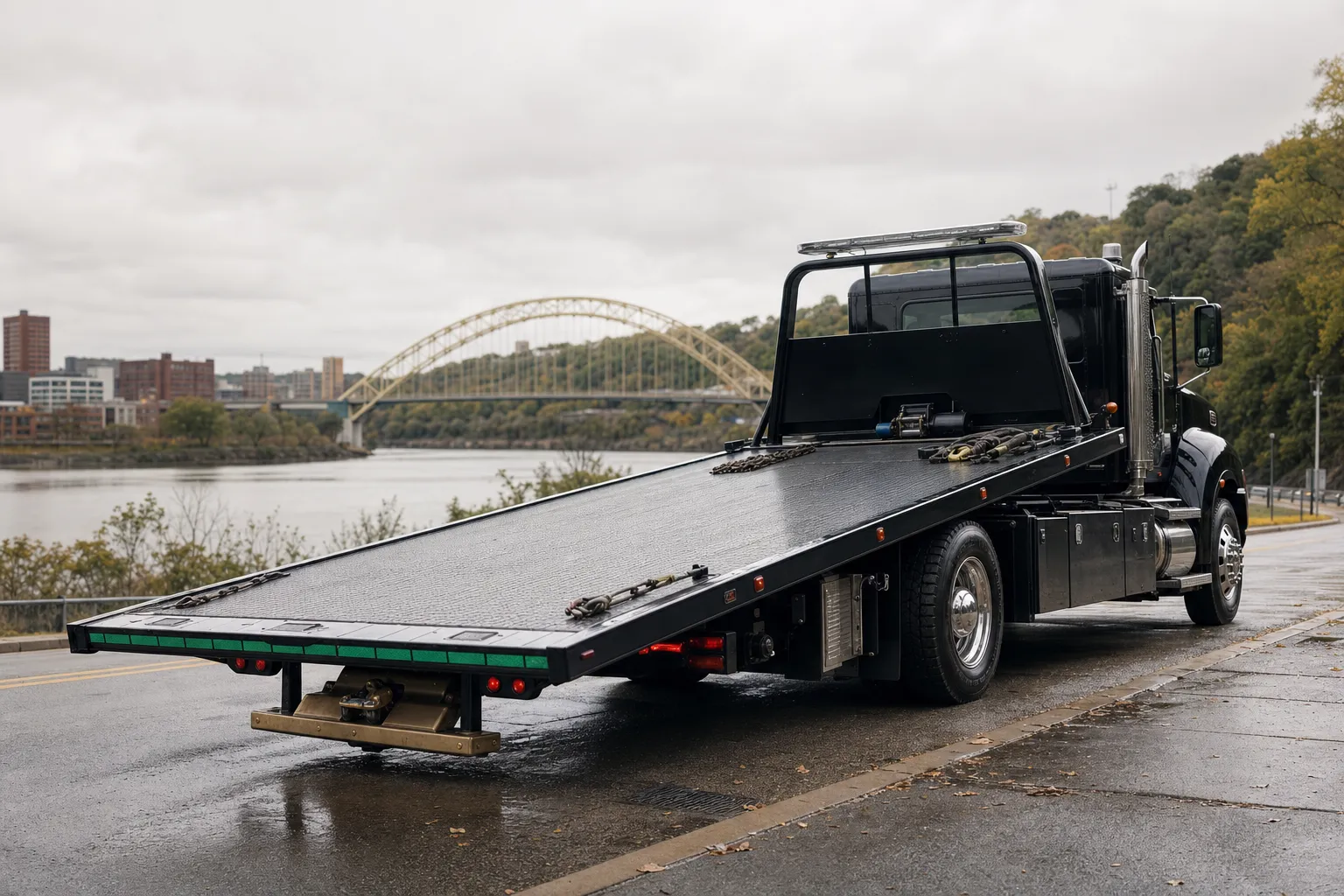
Call roadside when a problem can be fixed at the scene without moving the vehicle, and call for a tow when the vehicle is unsafe to drive, stuck, or involved in an accident. At Tom Coop LLC Towing and Recovery we handle both roadside fixes and full towing operations in and around Bethel Park, Pennsylvania, and we advise the option that protects you and your vehicle.
What is When To Call Roadside
When To Call Roadside is the decision point between asking a technician to come fix a vehicle where it sits, and asking for a tow truck to move the vehicle to a shop or secure location. Roadside services cover items such as jump starts, tire changes, and car unlocks. Towing includes moving a disabled vehicle, recovering a vehicle from a ditch or embankment, or transporting a vehicle after a crash.
We provide 2 7 roadside assistance, jump starts, flat tire repair, car unlock service, winch out service and light towing, so we see the full range of scenes that drivers in Bethel Park encounter. Knowing which service you need will save time and reduce risk.
Why this decision matters in Bethel Park
Choosing roadside service or a tow affects your safety, your cost, and how quickly you get back on the road. Bethel Park has a mix of suburban streets, highway approaches and steep neighborhoods. Some roads have limited shoulder space and visibility, which changes what is safe to attempt at the scene.
We prioritize safety and minimizing disruption. If a vehicle can be safely restarted, a flat tire can be changed, or the keys retrieved without moving the vehicle from a hazardous spot, a roadside call can be faster. If the vehicle is blocking traffic, sitting on an unstable slope, or has heavy mechanical damage, towing is usually the correct choice.
Key concepts to understand
- Roadside fix. A service performed where the vehicle sits, such as a jump start, tire change, or unlocking a car.
- Safe scene. Adequate space, visibility, and a stable surface make roadside work reasonable; otherwise a tow is safer.
- Extent of damage. Mechanical failure, fluid leaks, or collision damage often require a tow rather than a temporary roadside repair.
- Vehicle containment. Vehicles on slopes, embankments, or partially off the road need recovery equipment and often a tow to secure them.
- Liability and insurance. Your insurer or fleet manager may have preferences about tow versus roadside, and some claims require an incident report or a tow to an approved facility.
How we decide on scene
We assess four things quickly, then explain your options. Our operators are trained to protect property and minimize disruption.
- Safety first. We evaluate traffic, shoulder space, visibility and any hazards, like leaking fluids.
- Problem diagnosis. We check battery state, tire condition, lockout type or whether the vehicle is stuck and needs a winch out.
- Fixability at the scene. If a jump start, spare tire change or noninvasive entry will make the vehicle operable and the scene is safe, roadside is the choice.
- Need for transport. If the vehicle is not roadworthy, or if repair requires shop tools, we recommend a tow and explain transport options.
Common roadside scenarios and our recommendation
| Situation | Typical recommendation |
|---|---|
| Dead battery with vehicle on a safe shoulder | Roadside jump start or battery assist |
| Locked keys inside, car otherwise operable | Car unlock service on scene |
| Flat tire and a usable spare, safe workspace | Flat tire repair or spare installation roadside |
| Vehicle in a ditch, partially off road | Winch out and typically tow to prevent further damage |
| Collision with structural damage or leaking fluids | Tow to a repair facility or secure storage |
Pro tip: If you are on a narrow or winding road, focus on getting yourself and passengers to a safe location before attempting any roadside fix. Tell the operator your exact location and hazards so they can bring the right equipment.
Checklist to help you choose roadside or towing
Ask these questions at the scene
- Is anyone injured or is medical help required?
- Is the vehicle blocking traffic or creating an immediate hazard?
- Can the vehicle be made roadworthy with a jump start, spare tire or key retrieval?
- Is the surface level and is there space for safe roadside work?
- Are there leaks, heavy damage, or a risk of fire?
Related services we offer
Knowing the services that can assist you makes decisions easier. For example, if you need a vehicle moved after a roadside fix we can follow up with towing. Read more about how towing works in our service description at the Towing service page for a detailed look at our transport and recovery options.
- 2 7 Roadside Assistance. Fast on scene help for minor failures and lockouts, see our roadside assistance overview to learn typical response times.
- Car Unlock Service. Non damaging entry methods to recover keys without drilling or cutting, described further on our car unlock service page.
- Winch Out Service. Recovery from ditches or soft ground, often followed by towing to avoid repeat recoveries.
- Jump Start and Flat Tire Repair. Short term fixes that can get you driving if the scene is safe.
Learn more about the trade offs between roadside work and transport on our When To Call Roadside topic page.
Related locations and service area notes
Tom Coop LLC Towing and Recovery is based in Pittsburgh and serves Bethel Park and surrounding communities. Some parts of our area, including highway ramps and older residential streets, have limited shoulders. When you are in a location with narrow shoulders or heavy traffic, we are more likely to recommend a tow to a safer staging area or a shop where we can complete diagnostics and repairs.
See our location listings for an overview of the neighborhoods and municipal areas we cover so you can pick the option that makes the most sense for your situation.
Helpful resources and standards
Industry guidance and federal safety advice are useful when you want to understand accepted practices for roadside work and towing. The National Highway Traffic Safety Administration provides consumer guidance on towing and vehicle safety.
The Towing and Recovery Association of America offers industry guidance on safe recovery practices, and federal employment statistics show how often roadside and towing workers operate in potentially hazardous conditions. These resources explain why operators use protective equipment and standard recovery procedures.
Common questions drivers ask
Below are frequent questions we answer at the scene or over the phone.
- Can you unlock my car without damage? Yes, when the lock type and situation allow it we use non invasive methods to regain access. If the lock requires more invasive work we explain the options.
- Will a jump start damage my vehicle? Jump starts are safe when performed correctly. We assess battery condition and electrical system before attempting a start.
- How long will a tow or roadside visit take? Response time depends on location, traffic and the service needed. We give an estimated arrival window and keep you updated once we are en route.
- What if my car is on a slope or in a ditch? That usually needs recovery equipment. We will recover the vehicle and, depending on safety and drivability, either make a roadside fix or transport it.
What to expect when we arrive
When our operator arrives we do a quick safety briefing, secure the scene and confirm permissions. We explain the fix or transport plan before starting work. If a tow is required we will explain whether a flatbed or wheel lift is the right choice based on the vehicle and the situation.
Watch out: Never attempt to change a tire or work under a vehicle on the shoulder of a busy road. Wait for trained help and keep passengers away from traffic.
Key takeaway
If the vehicle can be safely returned to service at the scene, roadside service is usually faster and less disruptive. If the scene is hazardous, the vehicle is not roadworthy, or recovery equipment is needed, towing is the safer choice. We evaluate safety, fixability, and damage, and then recommend the option that protects people and property in Bethel Park.
Frequently asked questions
When should I choose a tow instead of a roadside jump start?
Choose a tow when your vehicle has sustained mechanical damage, is leaking fluids, is on a slope or in a ditch, or when the scene is unsafe to perform a roadside jump. If the vehicle only needs a battery boost and you are in a safe spot, a roadside jump start can be faster.
Can you unlock modern keyless entry systems?
We handle many keyless entry situations, including retrieving keys and resolving lockouts. Some transponder or immobilizer problems require a locksmith level intervention or tow to a dealer. We will assess the system and advise the best course.
How do you recover a vehicle that is stuck off the road?
A winch out service is used for vehicles that are stuck in soft ground or partially off the roadway. After the recovery we evaluate whether the vehicle is safe to drive. If not, we arrange transport to a repair facility.
Will roadside service affect my insurance claim?
Roadside service itself is neutral, but if a claim involves damage from an accident your insurer may request a tow to an approved facility for inspection. Always check your insurer or fleet policy for any special instructions.
Where to learn more and check our profile
Read more about when to call roadside on our detailed topic page, and review our towing service description to understand how we handle transport and recovery. You can also view our service area and location listings to see if your neighborhood is covered.