
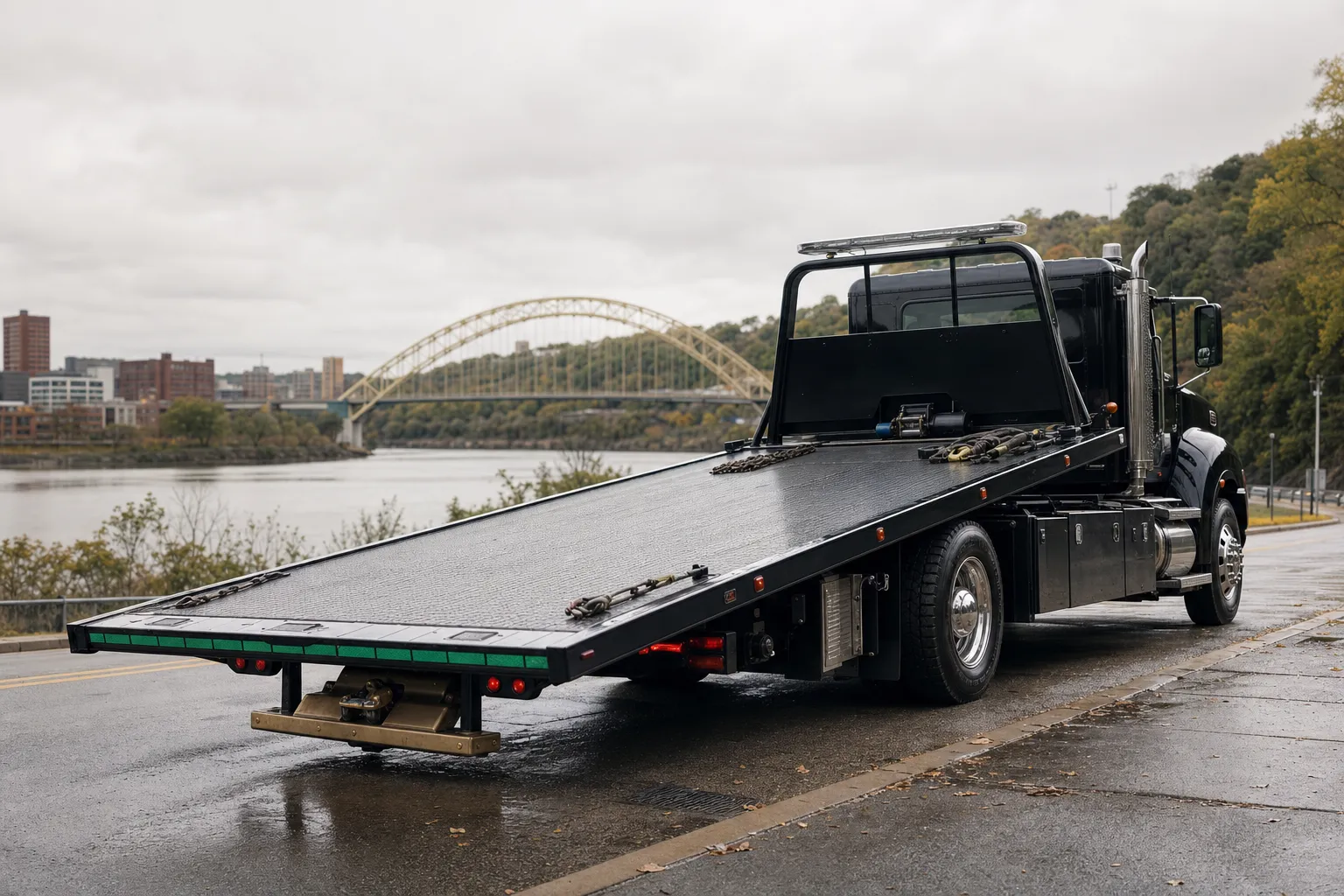
A winch out service review is the safety and planning check we perform before recovering a stuck vehicle. We inspect the vehicle position, evaluate ground and anchor points, choose the proper winch gear and rigging, and explain the recovery plan to minimize damage to the vehicle and surrounding property.
Why a formal winch out review matters
Winch out work involves controlled forces and a risk of vehicle or property damage if we do not plan carefully. Doing a review first lets us identify hazards, pick the best recovery method, and set up protection for the vehicle, nearby structures and bystanders. That planning step is why our operators take the review seriously in Reserve and across Pittsburgh.
What we check during a winch out service review
On every job we run a short but methodical checklist. The items below are the things we look at and why they matter.
- Vehicle position and orientation. We note how the vehicle is lodged, which wheels have traction, and whether the drive train or suspension looks compromised.
- Ground conditions. Mud, sand, frozen ground and steep banks change how we anchor and the pull angle we choose.
- Anchor options. We identify solid anchors such as trees, other vehicles or our truck frame and decide whether to use strap anchors or a ground anchor kit.
- Vehicle attachment points. We use factory rated tow points or safe chassis attachments, never unconventional or weak tie ins.
- Rigging and gear selection. We select line type, snatch blocks, winch capacity and rated recovery straps that match the vehicle weight and situation.
- Obstructions and property risk. We look for fences, curbs, landscaping and underground utilities that could be damaged by the pull or by shifting ground.
- Safety perimeter and communication. We set a clear exclusion zone, assign a spotter, and confirm hand and radio signals before starting the pull.
Our winch out process, step by step
- Scene assessment. We park to protect traffic, put on hazard lights, and complete the visual inspection described above.
- Plan selection. We decide whether to pull directly, use a snatch recovery with a pulley, or reposition our truck for a safer pull.
- Anchor and rigging setup. We secure the anchor, route the winch line with appropriate blocks and soft shackles, and protect vehicle contact points with flotation or padding where needed.
- Test pull and monitoring. We use low tension test pulls to check for binding, listen and watch for slippage, and confirm the vehicle moves as expected.
- Controlled recovery. We execute the full pull with a spotter watching wheel movement, steering, and any shifting ground until the vehicle is on stable footing.
- Post recovery inspection. We inspect for obvious vehicle damage, stow rigging, and advise the driver on next steps such as towing, tire checks or an inspection at a repair shop.
We are licensed and insured, and our operators follow local towing trade association guidelines when available.
Safety and property protection
Our review focuses on safety for people and protection for property. A few key protections we use during a winch out include:
- Rated recovery straps and shackles with clear working load limits.
- Edge protection to prevent chafing of straps or winch lines against metal or concrete.
- Soft padding on vehicle bodywork where straps contact painted surfaces.
- Traffic control and a clear exclusion zone to keep bystanders out of the line of tension.
Watch out: Using a single unsecured anchor, or attaching to non rated points, raises the risk of sudden failure. That can cause serious injury or property damage. That is why we perform the review and use rated components only.
What you can do while we perform the review
You do not need to get involved in the technical work. Helpful things you can do include:
Driver checklist
- Turn off the engine if safe to do so and set the parking brake if it helps stabilize the vehicle.
- Put the vehicle in park or neutral as we instruct, and remove objects from the floorboard that could shift during recovery.
- Tell us about recent damage or mechanical concerns, such as a broken axle or leaking fluids.
Pro tip: If you know the vehicle weight category, tell your operator. It helps speed gear selection and can shorten the review time.
When a winch out is not the right choice
Our review can also lead us to a different plan. We will recommend other approaches if we find any of these conditions:
- Severe structural damage to the vehicle frame that could fail during a pull.
- Unsafe anchor options with no practical way to create a rated anchor without excavation or heavy equipment.
- Unrecoverable terrain where a staged recovery or lifting with a crane is the safer solution.
When a winch out is not appropriate we will describe alternatives, such as flatbed towing or lighter repositioning followed by a staged recovery. For more on the types of recoveries we perform, see our Types Of Towing page.
How this ties into other services
Winch out reviews are part of a larger set of roadside services. If the recovery uncovers locked doors or battery problems we can coordinate with our auto locksmith and jump start teams. We also work with our towing crew to move a vehicle to a repair shop when needed.
- Learn about our dedicated Winch Out Service for technical details on equipment and capacity.
- For one call solutions during an emergency, see our 2/7 Roadside Assistance page.
- For standard towing and transport needs we maintain a separate fleet, detailed on our Towing page.
Typical timelines and what to expect
A full review and a straightforward winch out can take 20 to 45 minutes from arrival to completion on a normal job. Complex recoveries, tricky anchors or steep terrain can extend that time. The review itself is usually 5 to 15 minutes and is the step that prevents delays or damage during the pull.
Key takeaway
Our winch out service review is the safety check that makes a controlled, damage minimizing recovery possible. We assess the vehicle, ground, anchors and gear, then pick a planned method and communicate it before any tensioning starts. That approach protects you, your vehicle and nearby property in Reserve and across the Pittsburgh area.
Frequently asked questions
How long does the review take before we start the winch out?
Most reviews take 5 to 15 minutes depending on access, visibility and site hazards. The review is a compact risk assessment that lets us choose the right gear and anchor strategy.
Will the winch out cause damage to my vehicle?
We plan to avoid damage by using factory rated attachment points, edge protection and controlled pulls. If we see a pre existing condition that raises risk, we will explain it and recommend alternatives such as flatbed towing or staged recovery.
Do you always use a truck as the anchor?
No. We evaluate all anchor options. When a strong natural anchor such as a mature tree is available and safe to use we may use it with a tree saver strap. If no safe anchor exists we will set a dedicated ground anchor or reposition our truck to create a direct pull path.
Do you handle recoveries in mud and steep banks in Reserve Pennsylvania?
Yes. Our operators are trained to handle wet or steep terrain and our fleet carries rated winches, snatch blocks and ground anchors. If conditions create unacceptable risk we will recommend a different plan and explain why.
Learn more and check our local profile
Read customer experiences and get directions on our Google Business Profile, and learn more about our winch out capabilities on our site.