
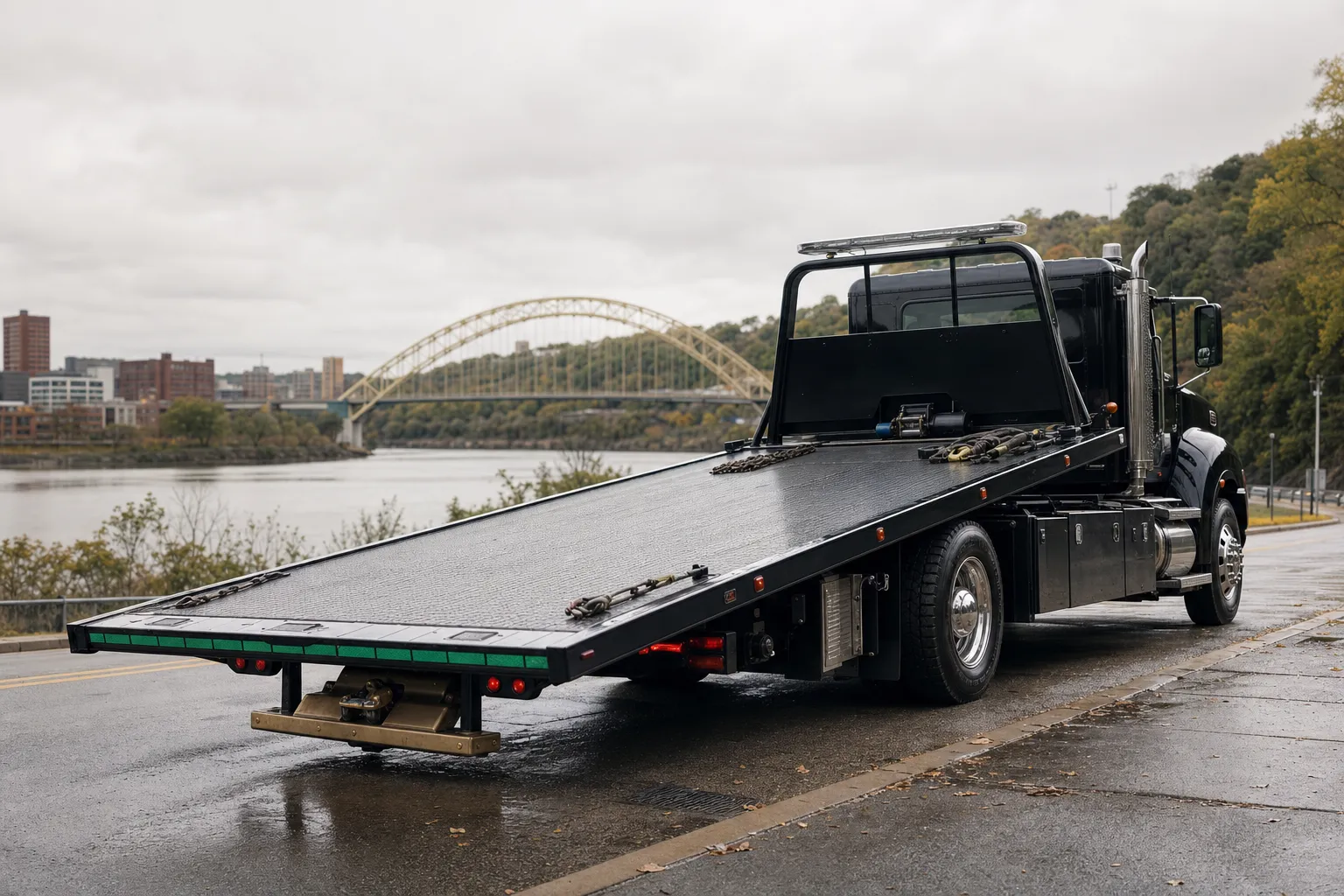
Car unlock service and towing are both about safety, protection of the vehicle, and restoring mobility while minimizing damage. At Tom Coop LLC Towing and Recovery we handle vehicle entry as part of a broader roadside response, using trained operators and the right tools to keep people and property safe.
How the two services overlap
A car unlock service and a towing response share four main goals: secure access, protect the vehicle, document the scene, and get you moving again or remove the vehicle safely. Whether we are unlocking a locked door for a motorist in Mount Oliver or preparing a vehicle for transport, the same safety protocols and care standards apply.
Safety and vehicle protection
We treat vehicle entry work with the same focus we give towing. That means assessing the scene, choosing noninvasive techniques first, and stopping if a method risks damage. Our operators protect trim, paint, and electronics when possible, and we take photos and notes as part of routine documentation.
Specialized equipment and training
Both unlocking and towing require specific tools and training. For entry we use slim jims, wedges, long reach tools, and manufacturer approved methods when available. For towing we use flatbeds, wheel lift trucks, and winches. Our technicians train on safe lifting, vehicle stabilization, and smart key systems so they can decide whether to unlock, tow, or do both.
Dispatch and response coordination
Dispatch treats a lockout like any other roadside call. We route the closest qualified unit whether the job is a simple keyout or it may lead to towing, such as when a vehicle has been left in a dangerous position. That coordination limits on scene time and reduces traffic disruption, especially near Mount Oliver landmarks and busy corridors.
Insurance and documentation
When a lockout leads to damage or towing, proper documentation matters for insurance claims. We record mileage, condition, and ownership verification steps, and we supply that information to whoever needs it. We work regularly with insurance adjusters, dealerships, and commercial fleets in the Pittsburgh area, so our reports follow the expected conventions.
How we approach vehicle entry safely
- Scene assessment. We evaluate hazards, traffic, and whether a noninvasive entry is feasible. If the vehicle is in a high risk location, stabilizing the scene comes first.
- Verify ownership. We ask for clear proof of ownership or authorization before attempting entry. This protects owners and our technicians.
- Choose the least invasive method. We try manufacturer recommended methods and tools designed to avoid damage to electronics and trim.
- Document before and after. We record vehicle condition, mileage, and any preexisting damage so there is a clear record.
- Follow up as needed. If entry cannot be done without risk, or if the vehicle is unsafe to leave, we coordinate towing or secure storage.
Watch out: Trying to force a locked car open can trigger airbags, damage electronic locking systems, or harm weather seals. Let trained operators assess the risk before taking action.
When both services are needed
There are common situations where unlocking and towing happen together. Recognizing these scenarios helps you know what to expect.
- Keys locked inside a car that will not restart, requiring transport to a repair shop.
- Vehicles left in unsafe locations, like narrow streets near South Hills or busy intersections, where removal is safer than leaving the car on scene.
- Damaged or jammed doors after an accident, where entry is needed for occupant safety and the car must be recovered.
- Keyless entry or transponder key failures that prevent secure restart, so the car must be towed for diagnostics.
Pro tip: If you are in Mount Oliver and can safely wait inside a nearby business, do so while the team works. That reduces risk on sidewalks and streets and lets us focus on the vehicle.
What to expect when we arrive
Our arrival follows consistent steps so you know what will happen and why.
On arrival checklist
- We confirm your identity and authorization to access the vehicle.
- We set up traffic control and safety cones when needed.
- We inspect the vehicle and explain the chosen method for vehicle entry.
- We document vehicle condition and take photos if towing may follow.
- We complete the entry, verify vehicle operation, or prepare the vehicle for towing or secure storage.
We are licensed and insured, and our operators follow safe handling guidelines for both light duty and heavier recovery jobs. That experience matters whether we are resolving a simple lockout or performing a complex recovery on a steep or confined site.
Common misconceptions and answers
- Myth: Any method is fine to get in quickly. Fact: Quick methods can cause expensive electronic and body damage.
- Myth: Keyless cars are always easy to open. Fact: Keyless and smart keys require manufacturer aware techniques, and improper handling can disable the system.
- Myth: Tow trucks will always tow a locked car. Fact: We try to resolve entry without towing; towing happens when the vehicle cannot be safely driven, or when entry would be unsafe.
How manufacturers and vehicle technology affect entry
Modern vehicles have more complex locking and ignition systems. Transponder keys, immobilizers, remote start, and integrated alarm systems all change how we approach entry and towing. When possible, we follow manufacturer guidance or use tools that comply with OEM limits to avoid triggering alarms or immobilizers.
For detailed background on towing, including types of tow methods, see our topic page on types of towing. For lockout specific options and when each is appropriate, see our topic page on car lockout options.
When to call a locksmith or when towing is the right choice
Choosing between an auto locksmith response and towing depends on safety, vehicle condition, and location. An auto locksmith or our car unlock service is appropriate when the vehicle is secure, can be safely driven, and the keys are simply inaccessible. Towing is the right call when the vehicle is unsafe to leave, when doors or ignition are damaged, or when the vehicle will not restart.
We work with local auto locksmiths and provide our own auto locksmith support as part of 2/7 Roadside Assistance. When a locksmith cannot safely resolve a problem on site, we arrange towing to a repair shop or dealership for further diagnostics.
Pros
- Noninvasive entry preserves vehicle condition.
- Combined dispatch reduces scene time when towing is required.
- Experienced operators reduce risk of damage.
Cons
- Modern electronics can limit options for noninvasive entry.
- Unsafe locations may require towing even if just a lockout.
- Proof of ownership checks can add time to response.
Practical tips to reduce lockouts and handle them safely
- Keep a spare key with a trusted friend or in a secure location off your vehicle.
- Program roadside assistance contacts into your phone and note nearby safe waiting areas in Mount Oliver.
- Know whether your vehicle has a transponder or keyless system and tell the operator, so we bring the right tools.
- If a child or pet is locked inside, call emergency services first, then request an immediate roadside unit.
- Regularly maintain key fobs and batteries to reduce failures.
If you want more guidance on key fob troubleshooting and transponder key issues, see our topics on key fob troubleshooting and transponder key problems.
Key takeaway
Car unlock service and towing intersect on safety, training, documentation, and equipment. We handle both with the same care, and when a lockout turns into a recovery, our team coordinates the right response for the vehicle and the situation in Mount Oliver.
Frequently asked questions
How long does a car unlock typically take?
Most routine unlocks take 5 to 20 minutes on scene. The time varies with vehicle make, locking technology, and whether we must secure the scene or verify ownership. If additional work is needed, such as towing, that adds time for preparation and documentation.
Will unlocking my car damage the vehicle?
We start with noninvasive methods and tools designed to avoid damage. While there is always some risk with older or damaged locks, our technicians document condition beforehand and select the safest approach. If an unlock method could cause harm, we will recommend towing to a repair facility instead.
Do I need to show proof of ownership?
Yes, we verify ownership or authorization before entry. That is standard practice to protect vehicle owners and our technicians. Accepted proof can include a driver license, registration, or written authorization from the owner or fleet manager.
What happens if my key fob is not working?
Key fob failures often require diagnostic work. We can perform battery checks and basic troubleshooting on site. If the vehicle will not start or the immobilizer remains engaged, we may unlock the vehicle and tow it to a dealership or locksmith for reprogramming and repair.
When will towing be necessary after a lockout?
Towing is necessary when the vehicle is unsafe to leave, when doors or ignition are damaged, when electronics prevent safe operation, or when a repair shop visit is required. We coordinate towing so your vehicle goes where it needs for prompt repair.
Are you licensed and insured?
Yes. Tom Coop LLC Towing and Recovery is licensed and insured to perform towing, recovery, and roadside services in the Pittsburgh area, including Mount Oliver.
Learn more and check our local profile
For local drivers in Mount Oliver, our team provides car unlock service, towing, and 2/7 roadside assistance across Pittsburgh. Read customer feedback and get directions from our Google Business Profile, and review related topics on our site to learn more about vehicle entry safety.